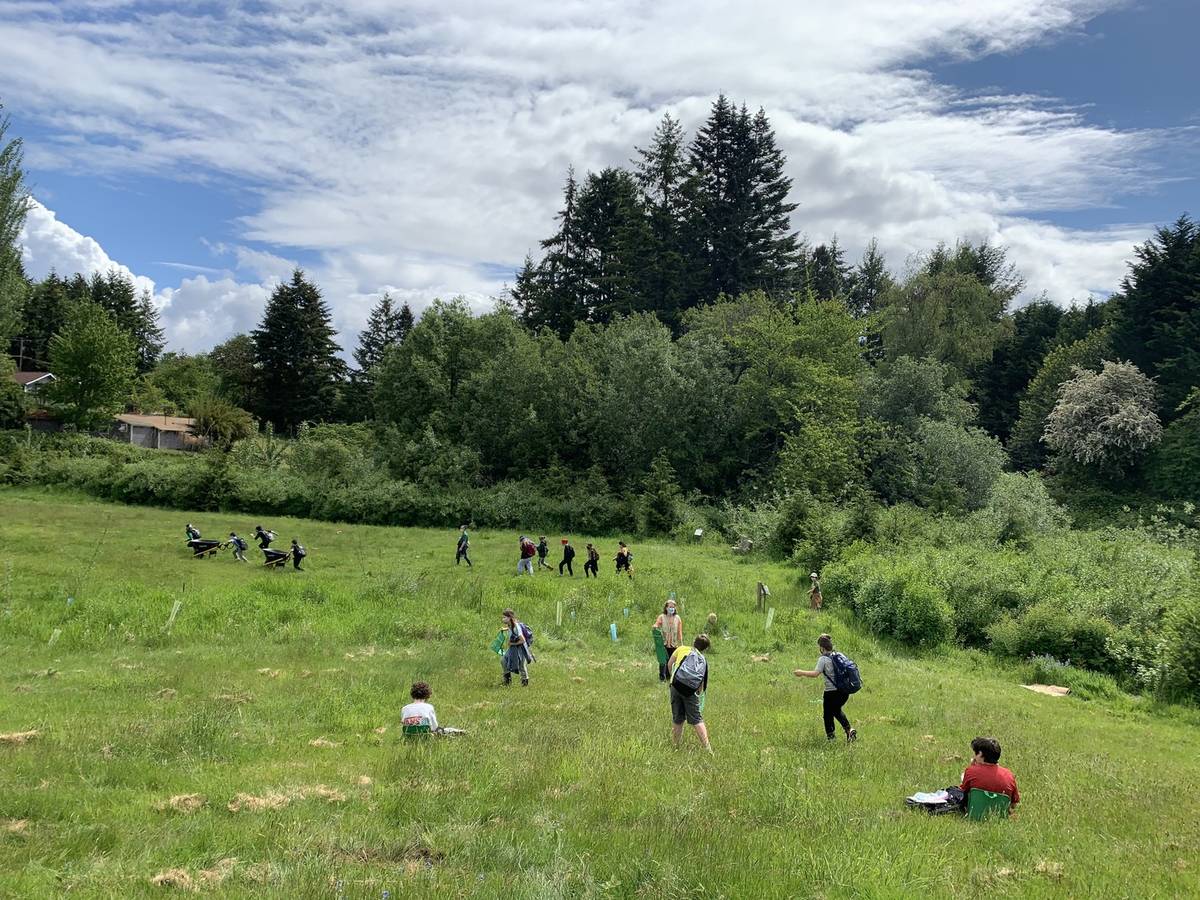
In 2019, Vashon Center for the Arts and Vashon Nature Center decided to join forces in order to accomplish a major task: to restore the two-and-a-half-acre wetland meadow that lies along the east side of VCA’s campus. Together, the organizations created a shared vision - to take the blackberry and other invasive-species-ridden plot of land directly behind the new VCA building and turn it into a shared community resource that would act as a sanctuary for native wildlife, a demonstration site for native restoration efforts, and an outdoor gathering place for the entire community to enjoy and benefit from.
The two-acre wetland’s restoration has been part of an ongoing effort to restore native wildlife habitat and populations across Vashon island. Heron Meadow is the eastern headwaters of Judd Creek, our island’s largest salmon-bearing creek, and acts as a filter, trapping harmful pollutants and cleaning the water. The Nature Center has tested water quality where it enters the meadow and compared it to where water runs off of the land so we can witness and track how well the meadow is helping to filter and clean our water.
Watching the meadow transform has been a deeply rewarding experience for these collaborators, and the fruits of their labor are plentiful! Currently, the meadow serves not only as the Nature Center’s main field-based office but also as an outdoor classroom, community gathering space, a quiet respite on a hot summer day, and a place on Vashon to connect with native wildlife.
.jpg)
Vashon Bird Alliance Mural
The meadow has given us a much larger space for art and science collaboration. The Vashon Bird Alliance’s mural by island artist Brit Frida highlights birds of the Judd Creek watershed and Quartermaster Harbor currently threatened by climate change.
Inspired by the National Audubon Society’s “The Audubon Mural Project,” the mural species include: bufflehead, Barrow’s goldeneye, sharp-shinned hawk, rufous hummingbird, Steller’s jay, red-breasted nuthatch, violet-green swallow, and a Swainson’s thrush. We hope this mural inspires Islanders to help ensure that birds have healthy habitats and maintain a bird-filled future for all on Vashon. The mural is located on the wall that forms the parking lot - just to the east of the VCA building and is available for public viewing at any time.
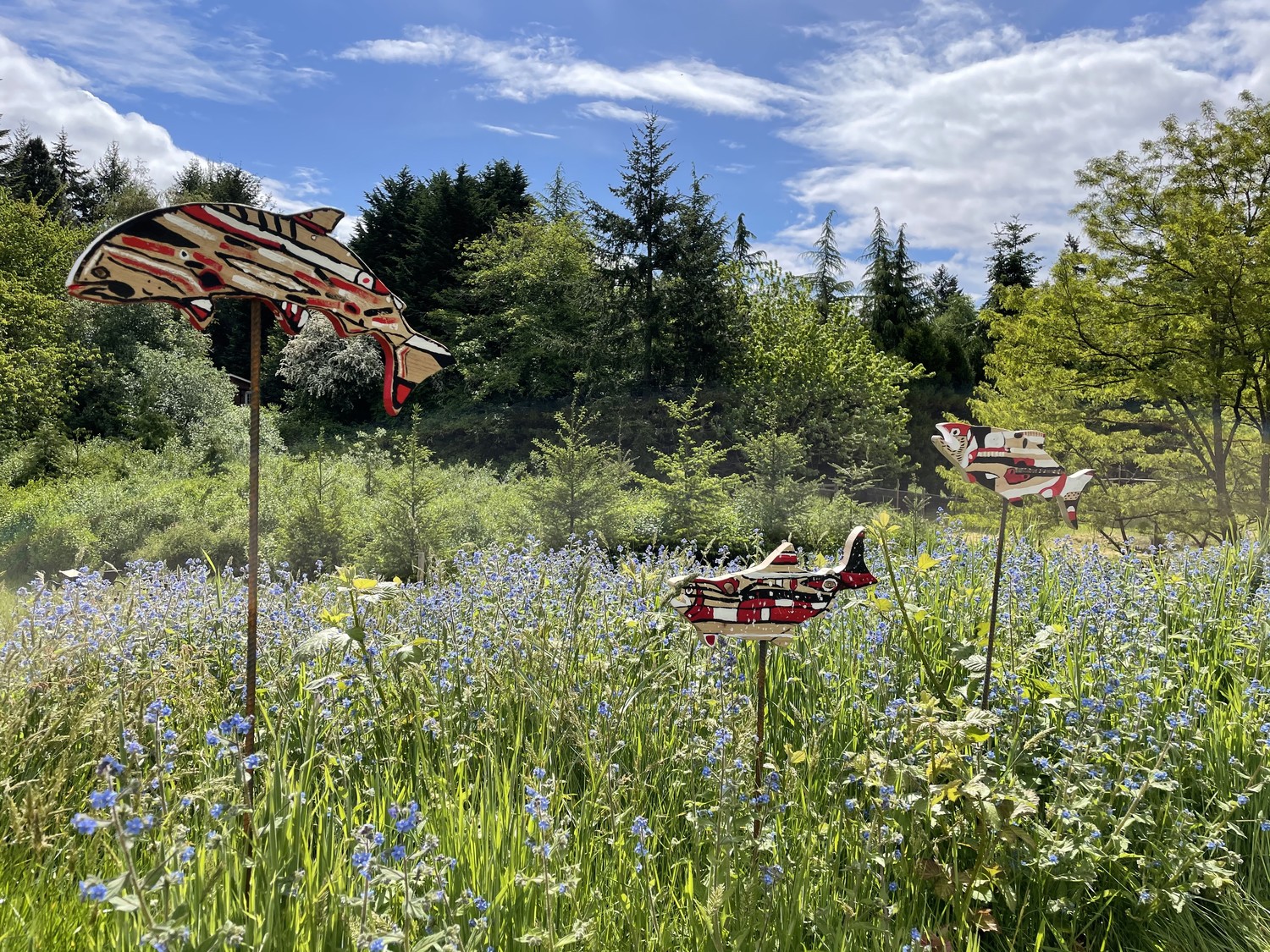
2020 Salmon Project
Envisioned and created by endangered species and social justice artist Britt Freda, the Salmon Walk installation underscores the importance of protecting native salmon and highlights the meadow as the headwaters of Judd Creek, the largest salmon-bearing creek on the island. The project is an example of the VCA and VNC’s collaborative public school education programs throughout the Vashon Island School District where Chautauqua Elementary’s 5th-grade students participate in VNC’s Scientists in Schools salmon program and VCA’s Artists in Schools program concurrently. Read more here.
This project was made possible with support from Puget Soundkeeper’s Alliance, The Rose Foundation for Communities and the Environment, and a Vashon Nature Center Waterworks grant from King County Wastewater Treatment Division.
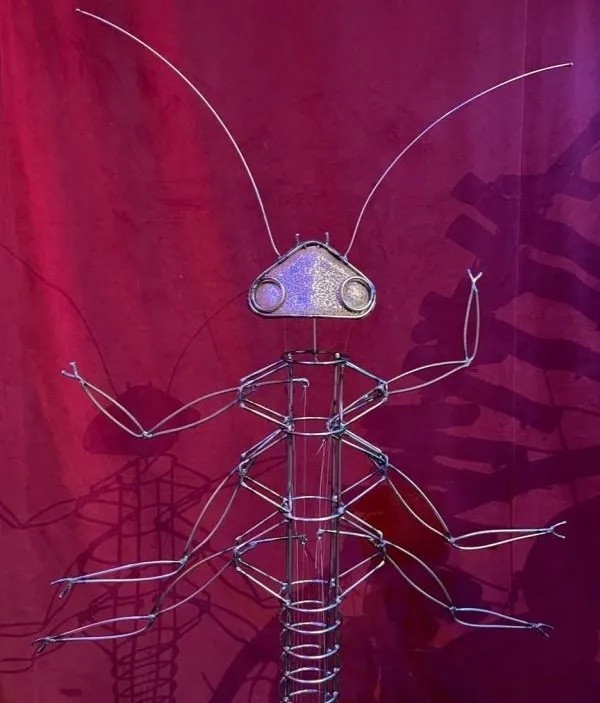
Stonefly Sculpture
Inspired by Vashon Nature Center’s stream invertebrate monitoring program, artist Ela Lamblin created a 20 foot tall sculpture called indicator species, which was first displayed at burning man and then other places around the Puget sound. In honor of this Art and Science partnership and Vashon Nature Center‘s help in consulting with Ela about stonefly characteristics and biology, the artist donated a smaller replica of the stonefly sculpture to Vashon Nature Center. This sculpture is proudly displayed near the barn at Heron Meadow.
Stream invertebrates are incredible indicator species that can tell us a lot about the health of our streams and what impacts our streams are experiencing. Vashon Nature Center along with a multitude of community volunteers, has monitored the invertebrates in several island streams for the past 12 years, helping to contribute to a long-term data set that directly informs and guides choices for habitat protection and restoration on our islands.